
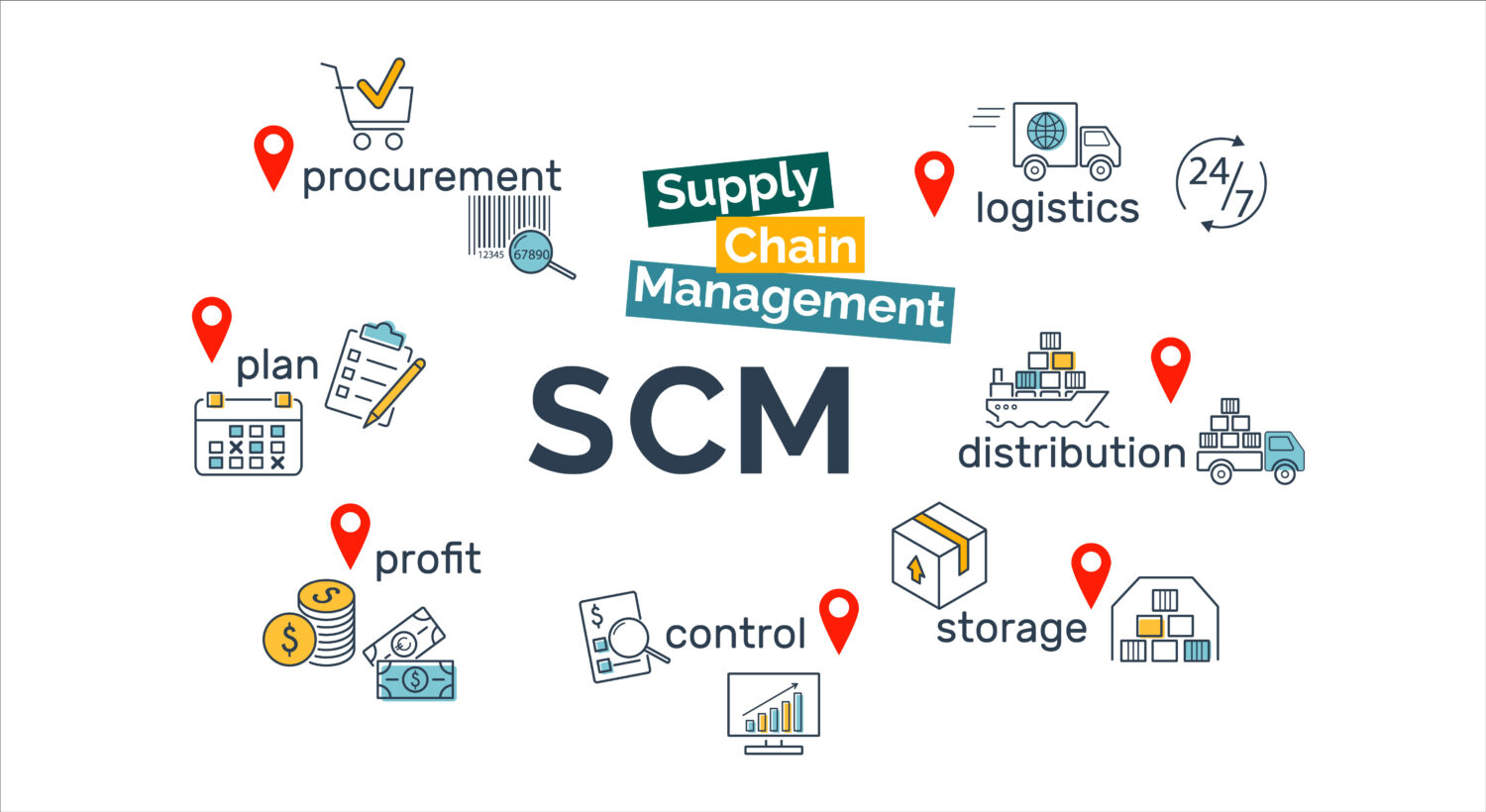
What is retail supply chain management, and how does it impact the operations of your business? The goal of retail supply chain management is not just to have a product to sell, but to coordinate all of the working parts involved, including sourcing, inventory, and distribution, with the specific objective of cutting costs and improving efficiency. That ensures that product flows from the manufacturer to the customer in the most effective way possible.
Customer demand has transformed the way the supply chain operates. For decades, the product was manufactured, shipped to retailers, and sold to customers who walked in the door. Only a fraction of business was conducted through the mail.
In 2025, retail e-commerce sales are expected to reach , and that figure is only likely to continue to rise. This move has flipped the script on how retail supply chains must operate, no matter the type of business model you employ. Faster, more efficient, and cost-effective supply chain performance is always the objective.
At Midwest AWD, we manage logistics operations from our Wisconsin distribution center, focusing on practical solutions that work for your business.
What Makes for Successful Supply Chain Performance
To meet objectives in managing logistics costs while also ensuring customers are satisfied with their product, there are numerous elements the retail supply chain must balance, including:
- Product availability
- Cost control
- Fast delivery
This is a careful balancing act, one that must ensure the right understanding of inventory management to meet customer demand without overpurchasing. With e-commerce and omnichannel environments increasing logistics demands, there’s a far tighter margin that must be met.
Failure in any aspect of the supply chain leads to:
- Reduction in revenue
- Lost sales
- Unhappy customers
- Damaged brand trust
Key Stages of Retail Supply Chain Management
Several stages of the supply chain processes must be managed effectively with a careful touch to ensure efficiency. Consider the inner workings of the retail supply chain:
Procurement & Supplier Coordination
Long before a product arrives in a customer’s hand, the supply chain process begins. It must consider:
- Sourcing of a reliable resource for materials that meets demand needs
- Ensuring the lowest cost for those materials while balancing availability
- Considering the impact of the cost of this stage of the process on the finished goods
To be successful, it’s critical to have strong vendor relationships that minimize the risks associated with failures in product and material availability or inferior products.
Manufacturing & Assembly
With the materials necessary, the next stage of retail supply chain management is producing the product. The process involves a careful balance of:
- Production planning, including how, where, and who will handle the process
- Component assembly that brings each component together into the final product
- Quality control along the way to ensure every component is made properly to achieve the final effectiveness and desired outcome.
Balance here ensures product availability at further points down the supply chain. It means aligning with suppliers to ensure competitive pricing on all elements of the operations.
Warehousing & Inventory Handling
A finished product now needs to be moved and stored until sold. In this stage, there are several overarching areas of management:
- Receipt of the product in an efficient manner that keeps it safe
- Storage in such a way that minimizes risks associated with the product, but keeps it easily accessible
- Stock rotation that ensures the right products are managed to maintain quality and ensure proper inventory turnover
- Order visibility, which product moves when necessary, by minimizing the length of time the product sits, and increasing inventory costs
In this section, demand forecasting is a critical component to ensure the product goes where it needs to be to achieve the retailer’s goals of meeting customer demand for speed and access.
Distribution & Fulfillment
At this stage of the retail process, it’s time to move goods to the retail outlets. It includes:
- Shipping products to stores where they will be placed in front of customers to buy
- Moving product to distribution centers, with careful logistics planning and demand forecasting to ensure the product is as close to the final user as possible
- Considerations for direct-to-consumer shipping, if customers will purchase directly to move the product from the warehouse and fulfillment center to their home
Critical here is meeting retail on-time delivery (OTD) standards, meaning the product must be moved effectively.
In every one of these stages, integrated planning ensures lower costs and yields higher shelf availability. It ensures the least expensive manner for moving products and keeping value in the budget.
The Importance of Inventory Management in Retail Supply Chains
To manage demand and yet meet financial objectives, inventory management becomes the most critical component of this process. Inventory accuracy ensures you know what you have, where you have it, and how to get it to your customer. It also ensures you don’t have so much product that you’re paying rent to have it sit on shelves.
When inventory is misaligned, several negative outcomes occur:
- Overstock creates tied-up capital and higher carrying costs
- Stockouts create lost sales and customer churn
- Brand impact and loss of revenue ultimately occur
With demand forecasting and reorder points, there’s far more efficiency. The best way to do this is through technology systems, including WMS and ERP tools. These automate a great deal of the process and, most importantly, provide real-time data. You know exactly what you have, where, and why.
Retail Distribution Channels
Consider the sheer number of fulfillment and distribution models that are present today and how each one introduces challenges to your fulfillment strategy:
- Brick-and-mortar store replenishment: Each location will have different demand levels, limited space for storage, and changing customer demands depending on demographics
- E-Commerce direct-to-consumer shipping: This method demands fast movement of product, which means the use of fulfillment centers close to customer hotspots
- B2B retail partnerships: Moving product to another retailer ensures better brand access but can complicate supply chains simply because you now have added layers of competition and management to face.
- Multiple carriers and transportation lanes: Ship, rail, trucking, and dozens of specific elements within each of these are also notches in the process, each requiring a different type and level of management.
Retailers shifting to omnichannel is an essential move. That means each one of these becomes a likely investment for your organization. That means inventory must be available everywhere customers shop.
Metrics That Drive Retail Supply Chain Success
Tracking how well you are doing within your supply chain is another core element of the management process. No matter the types of warehouses you use or the range of 3PL ecommerce fulfillment models you manage, the following key performance indicators matter:
- Fill rate, or the percentage of demand met
- Order accuracy and perfect order rate
- On-time delivery and route optimization
- Inventory turnover
- Shrinkage control
- Cost per order shipped
- Average inventory associated costs overall
- Cycle counting metrics
Utilizing technology that lets you clearly see these and other metrics in real time enables faster changes, better growth management, and lower overall costs. Every optimization you make in one area has a ripple effect on others, compounding benefits in most cases.
Challenges in Retail Supply Chain Management
Take into consideration the range of complexities that play a role in this process, which makes a simple step-by-step process more complex.
- Rapid demand fluctuations, including those due to trends and seasonality of products
- Retail compliance and routine guide requirements, ensuring that third-party logistics and in-house systems operate within the expected best practices
- Limited labor and the rising cost of logistics in general, including from third-party logistics networks
- Need for scalable storage and distribution space that allows for influxes when demand is higher
- Returns management and reverse logistics to manage products once returned by customers
Retailers need flexible partners that can scale and shift as demand changes. That includes having a custom contract assembly in place to meet changing demands right from the start, with assembly and packaging. Without established, mutually beneficial vendor relationships, limitations are common.
Retail Supply Chain Solutions That Improve Efficiency
Solutions exist for most of the concerns that your supply chain operation will encounter over time. That includes:
- Warehouse slotting and space optimization are built together
- Kitting with custom assembly services
- Quality control checkpoints
- Multi-site distribution or hub-and-spoke strategy
- Packaging and labeling to retailer spec
- Carrier and transportation coordination
Outsourced logistics partners enhance efficiency while reducing overhead. As you take into consideration balancing each individual area, recognize the value in specialized help.
Why Many Retailers Outsource Supply Chain Operations
There are numerous value-added benefits to businesses that outsource. That includes:
- Converting fixed labor costs in-house and space costs to a more flexible cost model, often reducing overhead tremendously
- Access to specialized logistics technology, including automation, that presents better insights and product control
- Improved receiver compliance and service levels reduce costly mistakes
- Faster scalability during demand surges and peak seasons, when necessary, meeting changing inventory levels and demands
This changes the way your business operates. It creates better margins, faster speed to shelf, and reduces overall operational risks. As demand rises and changes, it becomes critical to have the right team on board.
At Midwest AWD, we offer retail supply chain management that oversees product flow from suppliers to customers. That ensures inventory accuracy, warehouse execution, and fast fulfillment, all critical aspects to profitability. And it ensures customer satisfaction.
Retail supply chains absolutely must adapt quickly to consumer demand and channel complexity. By outsourcing to skilled logistics partners like us, you have far more cost-effective solutions at hand.
SOURCES
https://www.netsuite.com/portal/resource/articles/erp/retail-supply-chain-management.shtml
https://www.berkshiregrey.com/learn/retail-supply-chain/
https://www.salesforce.com/au/blog/retail-supply-chain-management/
https://www.logisticsbureau.com/retail-supply-chains/
https://bamboorose.com/blog/retail-supply-chain-management/
https://www.shopify.com/my/retail/retail-supply-chain
https://www.gobolt.com/blog/what-is-retail-supply-chain/
https://www.smartwarehousing.com/blog/five-best-practices-for-retail-supply-chain-management