
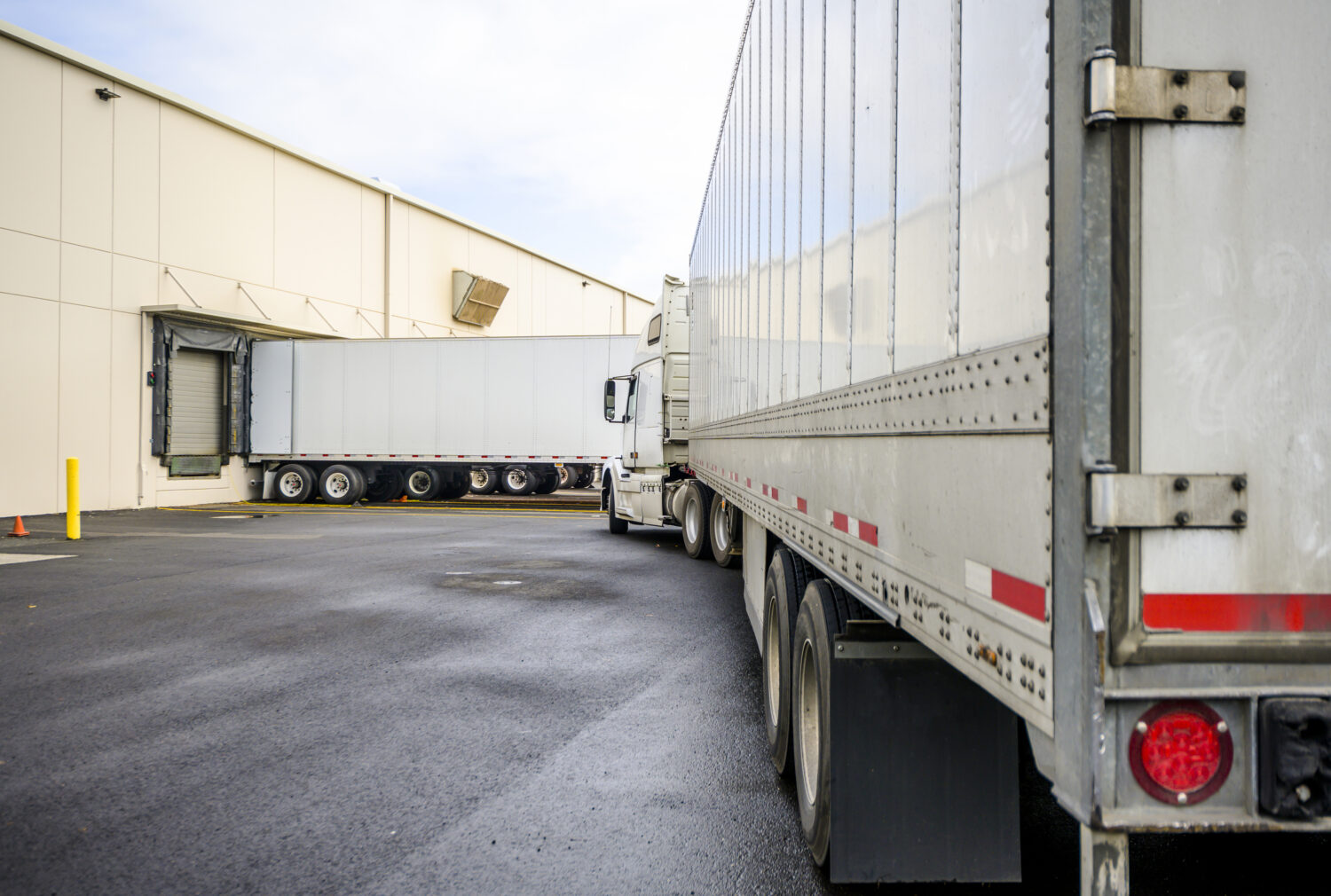
Logistics is the overall process of planning and executing the movement and storage of products from one place to another. Inbound logistics deals with the procurement of raw materials and goods from suppliers and vendors outside of a business and focuses on receiving and storage. Outbound logistics handles the movement of finished products out from a business to customers and focuses on warehousing, order fulfillment, and distribution.
Inbound and outbound logistics are part of the supply chain, which encompasses the entire system of delivering a product to a customer. This starts from the first stage of sourcing and procuring raw materials and goods, inbound logistics, to the end stage of delivery and shipment of the finished product to customers, outbound logistics.
The supply chain covers all parts of procuring materials from vendors and suppliers to make a finished product and then the movement of that product to customers. It involves suppliers, inventory, tracking, warehousing, shipping, delivery, and returns of products.
Optimizing inbound and outbound logistics creates operational advantages for a company and the supply chain by accelerating delivery times, improving work processes, and developing efficient inventory management. These efficiencies ultimately lead to cost savings. Inbound and outbound logistics must work together in harmony for the overall success of the supply chain and an organization.
What Is Inbound Logistics?
Inbound logistics refers to the strategic management of sourcing, transporting, receiving, storing, and distributing incoming goods, raw materials, or supplies from vendors and suppliers into a company’s production process or warehouse. It focuses on optimizing the flow of materials into a company to minimize costs, enhance inventory accuracy, and prevent production bottlenecks.
Inbound operations are generally managed by inbound logistics managers, logistics coordinators, and supply chain managers. Together they oversee the inbound logistics process which covers purchasing, sourcing, receiving, unloading, storing, and inspection of goods and supplies. The team also schedules, coordinates, records, and tracks inventory to ensure real-time efficiency in the supply chain.
What Is Outbound Logistics?
Outbound logistics refers to the process of storing, transporting, and distributing finished goods from a business to the final customer or retailer. It focuses on order fulfillment and distribution. The outbound logistics process is carefully managed by logistics managers, distribution teams, or outsourced third-party logistics (3PL) providers. This team oversees the storage, transportation, and delivery of finished goods from the business to the customer or retailer.
Key duties of outbound logistics include order processing and fulfillment, picking, packing, storing, staging, loading, carrier selection, shipping, and returns management. The goal is to ensure products are delivered accurately, timely, in good condition, and customers are satisfied.
Inbound vs Outbound Logistics: Side-by-Side Comparison
Inbound logistics focuses heavily on the receiving portion of logistics and deals with sourcing of raw materials, parts, and goods into a company from suppliers to ensure products can be made. This includes overseeing materials arrive in on time and in good condition. Inbound logistics also focuses on the storage of goods and inventory management to ensure proper stock levels.
Outbound logistics focuses heavily on delivery and is concerned with the storing and distribution of the finished products and getting them out to the customers. This includes warehousing, order processing and order fulfillment, pick and pack of items from inventory, shipping, delivery, and returns.
Category | Inbound Logistics | Outbound Logistics |
Direction of Flow | Supplier → Warehouse | Warehouse → Customer |
Primary Focus | Supply continuity | Customer delivery |
Key Activities | Receiving, inspection, storage | Picking, packing, shipping |
Performance Goal | Inventory accuracy & availability | On-time, accurate delivery |
Cost Drivers | Freight, storage, labor | Fulfillment, shipping, returns |
How Inbound and Outbound Logistics Work Together
Inbound and outbound logistics must work together to accomplish a company’s goals. If both are operating well, success occurs. Each stage must flow seamlessly into the next stage for proper logistics management. Inbound and outbound logistics cannot function independently.
Inventory levels at the inbound stage will ultimately affect order fulfillment at the outbound stage. Assembly and packaging will affect if products are market ready for shipping. A poor inventory management system will affect the overall success of supply chain management at an organization.
Dock scheduling conflicts and poor inbound logistics planning can lead to low inventory and no materials to create products at the outbound end. Late delivery will lead to customer dissatisfaction and fewer orders. When inbound and outbound logistics processes work well together, they avoid these issues to create a seamless flow of goods, creating an effective and efficient supply chain.
Key Challenges in Inbound Logistics
Inbound logistics faces several challenges. Unpredictable suppliers, expensive raw materials, long lead times, lack of real-time shipment arrivals, high transportation costs, and even traffic and weather can be obstacles to navigate. If items do not arrive timely or arriving drivers do not know what dock to use, this creates problems.
Limited space at a facility to process and store inbound packages, along with inventory discrepancies and inaccuracies in an inventory management system can take time and money to store out. Balancing the supply and demand of the market is also a challenge. Knowing when to order more raw materials and goods for seasonal spikes and being able to process escalating customer demand is a difficult balancing act.
Key Challenges in Outbound Logistics
Outbound logistics suffers many of the same problems as inbound logistics. Rising shipping costs, inaccurate shipment tracking, limited storage for outbound items, order inaccuracies, and return processing management are all challenges outbound logistics must overcome.
Weather and seasonal order spikes also can pose problems. Accurately forecasting customer demand and correctly relaying this information to inbound logistics is a challenge at times. Processing customer returns, or reverse logistics, and maintaining customer satisfaction are also challenges.
Technology’s Role in Managing Inbound & Outbound Logistics
Technology has provided vast improvements in helping to manage inbound and outbound logistics. Many of the previous sorting, tracking, pick and pack, and inventory recording functions can now be automated. This greatly enhances the speed, visibility, accuracy, and cost-efficiency of operations.
Specialized software, such as a warehouse management system (WMS), helps to optimize routine daily warehousing operations, such as receiving, tracking, inventory management, picking, packing, and shipping, through automation. This software works in parallel with tracking sensors to provide automated updates at any time in the process.
A transportation management system (TMS) also helps improve warehousing functions by automating planning, execution, and movement of both inbound and outbound logistics. A TMS can show all shipments and their locations in real time. It can streamline operations by automatically selecting and booking the cheapest, quickest, and most reliable carrier.
GPS, bar codes, tags, scanners, and sensors are critical in both outbound and inbound logistics. They provide real time, 24/7 precise inventory tracking, shipping updates, and instant insight into inventory and movement of products. These crucial pieces of technology work together with WMS and TMS software to provide information as to where a product or raw material is in the supply chain. This allows for proactive management of any delays and improved customer service.
Robotic package handling, storage, and retrieval can improve the speed and accuracy of picking and packaging operations. Data analytics and forecasting tools can also help predict seasonal spikes and provide workarounds to improve supply chain efficiency and response.
These systems working together help improve efficiency, reduce costs, minimize errors, provide real-time supply chain visibility, and help improve customer satisfaction. Technology helps streamline the entire supply chain so it can function much more efficiently and accurately.
Why Balancing Inbound and Outbound Logistics Is Critical for Profitability
Maintaining resilient inbound and outbound logistics with the ability to forecast and anticipate disruptions is a critical part in maintaining profitability for an organization. Being able to reduce inefficiencies helps reduce overall costs. This helps to create steady production rates and a smooth-running operation.
Increasing the efficiency of inbound and outbound logistics allows for faster inventory turnover by aligning purchasing demand with more accurate forecasting. This helps reduce lead times, optimizes warehouse space, and improves inventory management. When inbound and outbound logistics are in sync the entire supply chain can operate at peak efficiency, which reduces overall mistakes, unexpected costs, and helps improve profitability.
Get Support for Both Inbound and Outbound Logistics
3PL partners can provide support to organizations with customized inbound and outbound logistics services. They can optimize warehousing functions through WMS, TMS, and automation, such as robotic package handling, storage, and retrieval. 3PLs can also offer integrating strategies for fulfillment and distribution to support the overall logistics of an organization.
3PLs are experts that provide comprehensive strategies that improve efficiency and reduce costs at businesses. These partners review an organization holistically and offer ways to improve warehousing and storage, shipping and delivery, and can help businesses even scale efficiently.
3PLs achieve these outcomes by providing innovative types of warehousing solutions, such as deploying software systems, streamlining inbound and outbound logistics, and providing data analytics for continuous process improvements. Many 3PLs also offer scalable labor and staffing during peak seasons. 3PLs can be viewed as efficiency experts providing overarching solutions from dock and inventory management to offering strategic warehouse locations to reduce travel time. When organization use 3PLs they can save time and money.
Creating a Seamless Logistics Operation
Evaluating inbound and outbound logistics is essential for creating a seamless logistics operation and should be part of a healthy, holistic continuous process improvement system. By reviewing an organization’s overall logistics process many improvements can be found. This is done by finding and making small, incremental changes that, over time, will minimize costs, improve fulfillment, prevent bottlenecks, and increase profit margins. The goal here is to enhance the entire operation.
Creating a seamless logistics operation involves integrating technology, working together across inbound and outbound logistics, adopting automation, and finding process improvements. When inbound and outbound logistics are coordinated the results are a seamless logistics operation that significantly increases operational efficiency, reduces costs, enhances product end-to-end visibility, and creates customer satisfaction.
Midwest Assembly Warehouse and Distribution can be your integrated warehousing partner. We can offer you comprehensive inbound and outbound process solutions that save time and money for your organization. Midwest provides end-to-end supply chain solutions by combining storage, inventory management, fulfillment, and transportation into one unified system. We can increase efficiency, reduce operational costs, and provide real-time inventory visibility through advanced technology.
As a 3PL partner we can provide 3PL ecommerce fulfillment, cross-docking, assembly and packaging services, and much more. We offer scalable, customized solutions for your warehousing needs. From storage to assembly and nationwide shipping we offer it all under one roof. Contact us for more information.